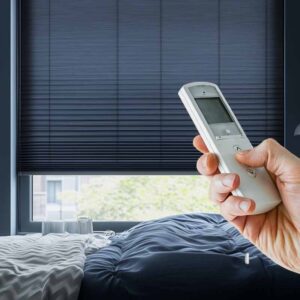
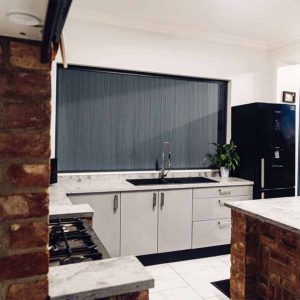
In this “The Ultimate Guide to Motorised Blinds” we will attempt to guide you through the key areas to consider when choosing your motorised blinds.
Convenience, Energy Efficiency, and Smart Home Integration
Smart home technology is no longer a futuristic concept; it is an everyday reality that adds immense value to modern properties. Among the most impactful upgrades you can make to your living space are motorised blinds. Whether you want to control hard-to-reach windows, improve your home’s climate control, or eliminate dangling cords for child safety, electric window coverings offer the perfect blend of luxury and utility. This comprehensive guide explores how automated window treatments work, their core benefits, power source varieties, and how they seamlessly integrate into modern smart home ecosystems.
What Are Motorised Blinds and How Do They Work?
Motorised blinds operate via a small, quiet, and concealed electrical motor built directly into the blind mechanism or roller tube. When activated, the motor rotates the internal shaft to smoothly raise, lower, or tilt the window covering. Because they are precision-engineered, they can be applied to almost any style of window dressing, including: Roller Blinds (including heavy-duty or double-roller day-and-night setups)Roman Blinds, Venetian Blinds (wood, faux-wood, or aluminium)Perfect Fit & Bi-Fold Blinds
Key Benefits of Upgrading to Electric Blinds
1. Enhanced Child and Pet Safety
Traditional window treatments rely on cords or looped chains, which pose a significant entanglement hazard for infants, young children, and domestic pets. Motorised systems are inherently 100% cordless, making them the safest possible layout for nurseries, playrooms, and family spaces. All automated fittings installed by professional suppliers comply fully with UK safety regulations.
2. Micro-Climate Regulation & Energy Efficiency
Window openings are a primary source of thermal loss in winter and heat gain in summer. Motorised variants act as a dynamic thermal barrier: In Summer: Close them automatically during peak daylight hours to block solar radiation and prevent the “greenhouse effect” inside your rooms. In Winter: Program them to open during sunny morning intervals to capture natural solar warmth, then close them at dusk to trap indoor ambient heat. This regular automation vastly reduces the reliance on central heating and air conditioning units, directly lowering utility bills.
3. Effortless Accessibility for Hard-to-Reach Windows
High-ceiling installations, skylights, conservatory roofs, and large architectural windows are notoriously difficult to adjust manually. Automated mechanisms instantly solve this structural challenge, allowing you to alter light filtration across distant or oversized glazing sections at the push of a button.
4. Advanced Property Security
Empty properties are frequent targets for opportunistic break-ins. Smart automated window fixtures provide a reliable visual deterrent. By configuring automated schedules or utilizing remote smartphone applications while travelling, you can ensure your blinds open and close at random or predetermined intervals, giving the distinct impression that the property is occupied.
Power Source Configurations: Battery vs. Hardwired
When choosing automated window coverings, select a power architecture that best suits your room layout and installation scale:
| Feature / Metric | Battery-Powered (Wire-Free) | Hardwired (Mains-Powered) |
| Power Source | Internal, rechargeable lithium-ion pack | Fixed connection to 230V home mains |
| Electrical Work | Zero wiring required; 100% DIY-friendly | Requires a certified electrician to install |
| Ideal Use Case | Retrofitting existing rooms and standard windows | Large-scale renovations, new builds, heavy fabrics |
| Maintenance | Requires recharging every 6 to 8 months via USB | Continuous, permanent power with no maintenance |
| Eco Upgrade | Can be paired with micro solar panels for auto-charging | N/A |
Smart Home Ecosystem & AI Assistant Integration
Modern electric blinds can interface with a variety of automated home platforms. Utilizing high-tier industry components—such as Somfy RTS or Sonesse motors—allows your window coverings to communicate directly with smart hubs and voice software:
Voice Activation:
Sync your shades to platforms like Amazon Alexa, Google Assistant, or Apple HomeKit to control exposure via voice commands (e.g., “Alexa, lower the living room blinds to 50%”).
Advanced Scheduling:
Set native applications to synchronize with local sunrise and sunset patterns. You can establish a gradual wake-up routine where daylight enters the bedroom incrementally each morning.
IFTTT & AI Sensor Triggers:
Program your blinds to interact directly with other internet-of-things (IoT) devices. For example, if an indoor smart thermostat registers a room temperature exceeding 22°C, it can trigger your south-facing blinds to drop instantly, cooling the room without human intervention.
Frequently asked questions
Are motorised blinds loud when operating?
Modern premium systems, particularly those engineered with acoustic dampening technology like the Somfy Sonesse series, operate at near-silent decibel levels, producing only a low, discreet hum
Can multiple blinds be controlled with a single remote?
Yes. Multi-channel remote handsets allow you to pair and control up to 5, 15, or more individual blinds simultaneously, or segregate them into specific structural zones (e.g., controlling an entire bay window array with one click).
What happens if the Wi-Fi network goes down?
Smart blinds preserve local hardware redundancies. If your internet connection drops, you can still control your window fixtures reliably using the physical radio-frequency (RF) remote control or integrated wall switches. Modern premium systems, particularly those engineered with acoustic dampening technology like the Somfy Sonesse series, operate at near-silent decibel levels, producing only a low, discreet humYes. Multi-channel remote handsets allow you to pair and control up to 5, 15, or more individual blinds simultaneously, or segregate them into specific structural zones (e.g., controlling an entire bay window array with one click). Smart blinds preserve local hardware redundancies. If your internet connection drops, you can still control your window fixtures reliably using the physical radio-frequency (RF) remote control or integrated wall switches.